Electrical troubleshooting and repairs
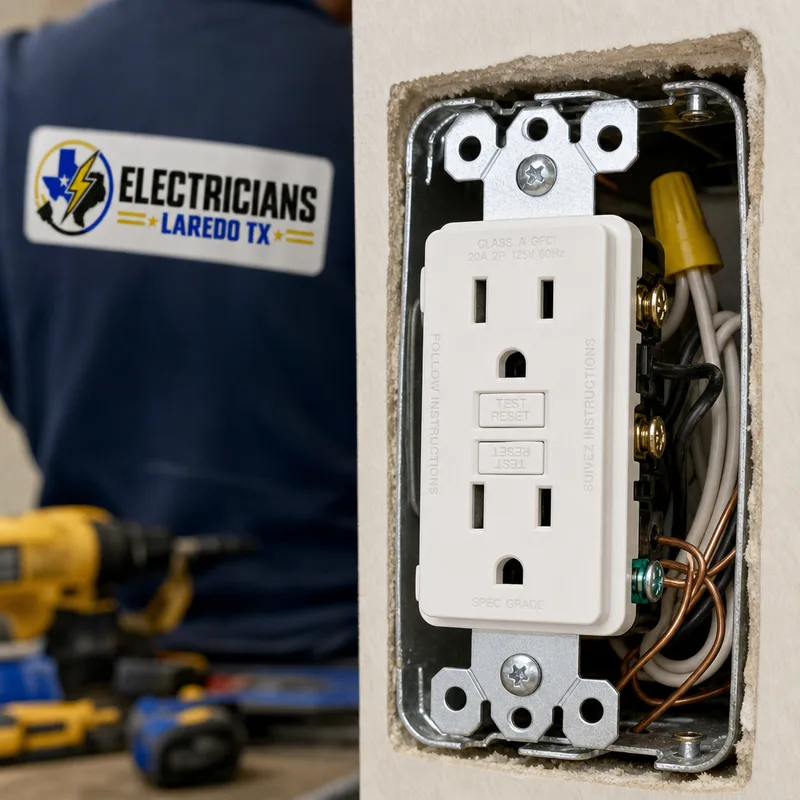
We track down open neutrals, loose connections, failed breakers, damaged receptacles, GFCI nuisance trips, and intermittent power. Expect testing, not guesswork.
Serving Laredo, Texas & surrounding areas
Mon–Fri 8am–6pm · Sat 9am–2pm
Licensed, code-focused electrical work for homes and businesses in Laredo. We troubleshoot fast, explain options clearly, and leave you with safe power you can trust.
If you searched for Laredo electric, you likely need one of two things: power that works the way it should, or a clear plan to upgrade what you have. Electric issues are frustrating because the problem can be at a device, in a junction, at the panel, or upstream in the service equipment. Our job is to find the real cause, fix it correctly, and document what we changed.
Electricians Laredo TX handles everyday electrical repairs, planned upgrades, and safety corrections for residential and light commercial properties in Laredo (78040). You will get a straightforward explanation of what failed, what must be replaced, and what is optional. We focus on code-compliant workmanship, clean routing, proper terminations, and devices that match the circuit.
Nuisance breaker trips, dimming lights, warm outlets, flickering, burning smells, or a dead circuit that keeps coming back are signals to stop guessing and have a licensed electrician inspect and test the circuit. Electrical problems do not usually fix themselves, and repeated resets can hide overheating at a loose connection.
For a broader look at who we are and how we work across Laredo, start with Electrician Laredo Texas.
We track down open neutrals, loose connections, failed breakers, damaged receptacles, GFCI nuisance trips, and intermittent power. Expect testing, not guesswork.
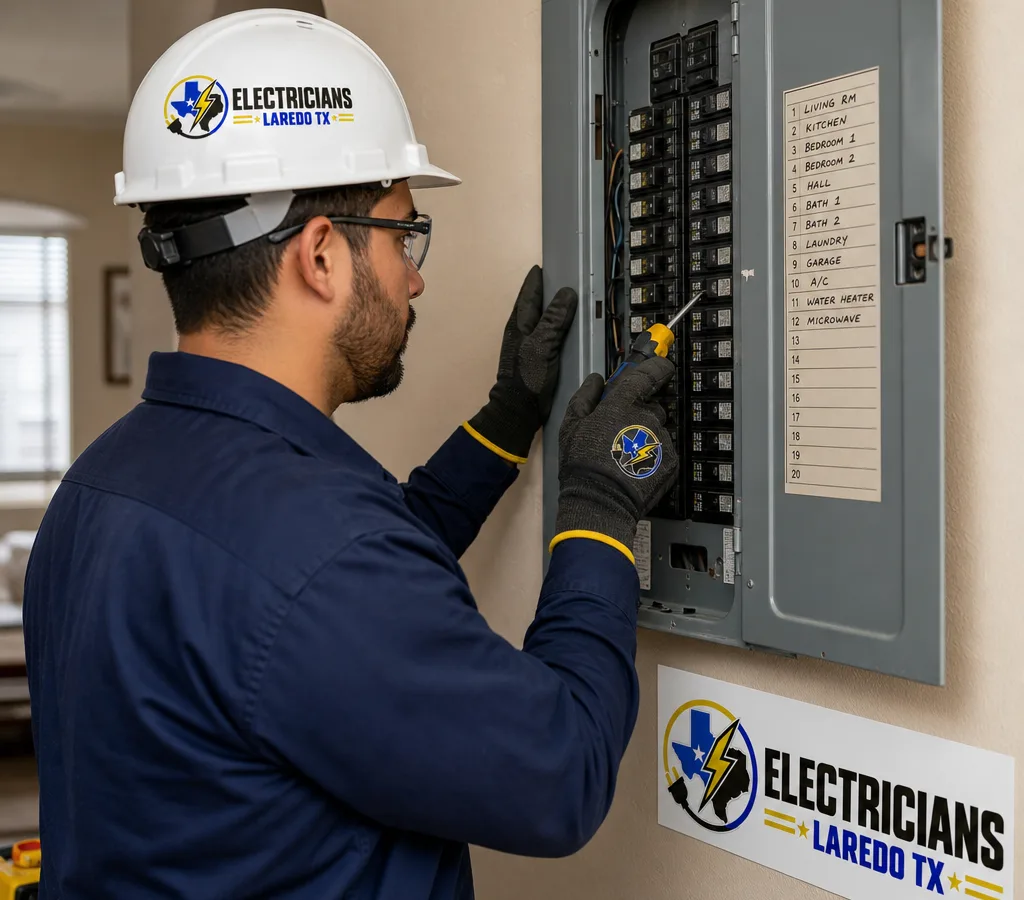
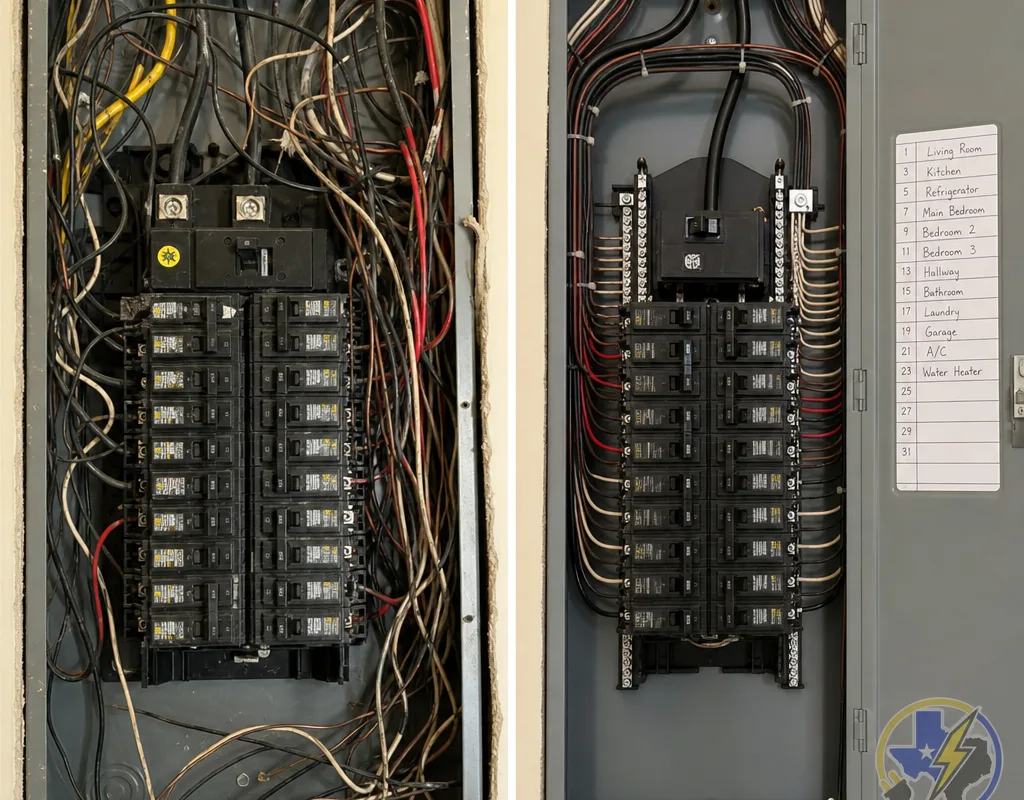
Breaker replacements, panel labeling and cleanup, correcting double-taps, replacing damaged lugs, and evaluating whether a full panel upgrade is the safer long-term fix.
Adding properly sized circuits for appliances, garages, workshops, office equipment, or outdoor loads. We match wire gauge, breaker type, and device ratings to the actual load.
Interior and exterior lighting installs, switch and dimmer upgrades, motion and photocell controls, and repairs for flicker caused by failing drivers, loose neutrals, or incompatible dimmers.
GFCI and AFCI protection where required, grounding and bonding corrections, and surge protection options to reduce damage risk during local storms and utility events.
Power issues, circuit additions, lighting repairs, and basic electrical corrections for retail and small facilities where downtime costs money and safety inspections matter.
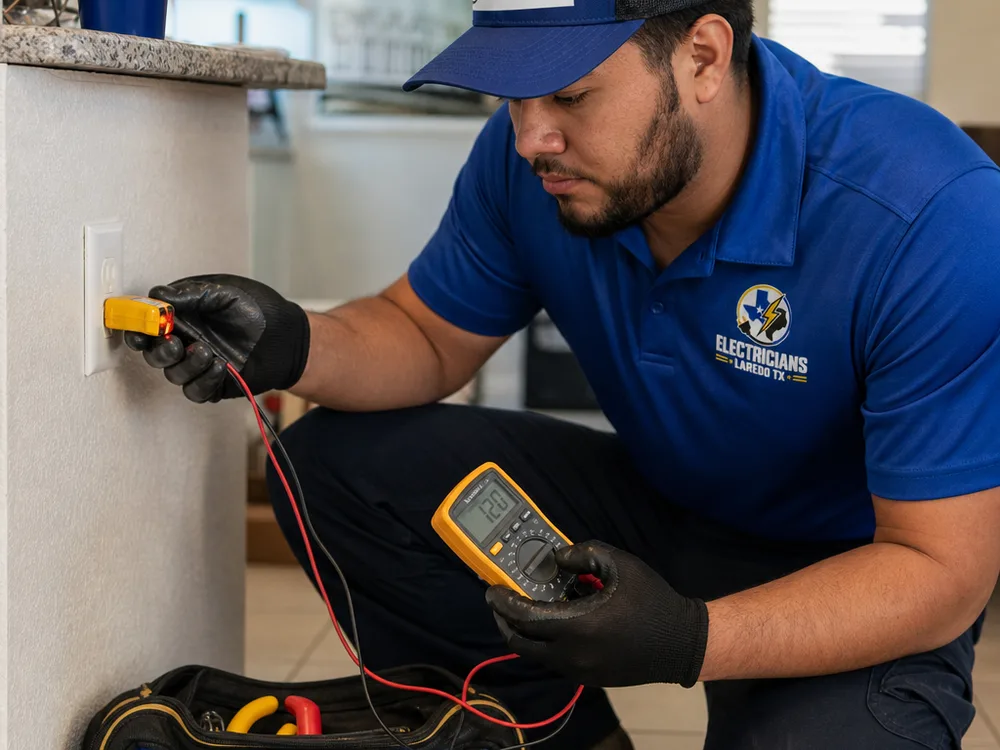
A good electrical repair starts with confirming what is happening, then proving why it is happening. We use meters and testers to check voltage, continuity, polarity, and grounding. For recurring trips, we look at load, breaker condition, and wiring terminations. For flicker or partial outages, we check for loose neutrals and overheated connections, including in the panel.
Laredo properties often mix older wiring methods with newer additions. That can mean a circuit was extended over time, box fill is tight, or the panel has been added onto with tandems and shared neutrals that need a careful look. In downtown and older neighborhoods like San Agustin, it is common to find multiple remodel layers where proper junction access and correct splicing are the key to reliability.
In areas with newer construction, like parts of Del Mar, we are frequently called for additions such as dedicated circuits, lighting upgrades, and correcting device issues after heavy use. In Winfield and other growing north-side zones, planned upgrades tend to be about capacity and clean installation: circuits laid out logically, labeled accurately, and protected with the right devices.
We also plan work around real South Texas conditions. Heat and heavy A/C run time can expose weak connections and undersized circuits. Storm seasons can bring surges and outages. That is why we pay attention to torque, conductor condition, and appropriate surge protection, not just whether the lights turn on at the moment.
You tell us what you are seeing—tripping, flicker, dead outlets, warm devices, or remodel plans. We start by making the area safe and identifying any immediate hazards.
We test the circuit, devices, and panel as needed. If the issue is intermittent, we document what we can verify and explain the most likely failure points.
You get a clear scope of work with the repair path and any upgrade options that would improve safety, capacity, or long-term reliability.
We complete the work to code, label what we change, and leave the work area clean. If a permit or inspection is required for the scope, we explain that up front.
We verify operation at the device and at the source, then walk you through what was done and what to watch for next.
Most Laredo electric service calls for diagnosis and a straightforward repair typically land around $150 to $450, while larger upgrades like adding circuits, replacing sections of wiring, or panel work commonly run $500 to $3,500+. Small jobs—such as swapping a failed device, fixing a loose connection, or replacing a breaker—sit at the lower end; multi-circuit troubleshooting or upgrades trend higher.
Your price depends on access, including attic, crawlspace, and drywall work; the number of circuits or devices involved; panel condition; and whether code updates such as GFCI/AFCI protection or grounding and bonding are needed. Exact cost is confirmed after on-site testing and a written scope.
“We had a breaker that kept tripping and another circuit that would die randomly. They tested everything, found a loose neutral in a box we never would have checked, and fixed it the same visit. Lights have been steady since.”
“Our panel was a mess from years of add-ons. They cleaned it up, labeled every circuit, and replaced the bad breakers. The explanation was clear and the work looked professional.”
It is urgent if the breaker trips immediately after resetting, trips with a burning smell, the panel feels hot, or you see discoloration at an outlet or switch. Those signs can point to a short, overloaded conductors, or a loose connection that is overheating, and the safest move is to keep the circuit off until a licensed electrician tests it.
Room-by-room flicker is usually a local wiring issue: a loose neutral, a failing switch or dimmer, a poor splice in a junction box, or an LED driver that is failing. We confirm whether voltage is stable at the panel, then test the circuit and connections feeding that room to locate the exact fault.
If the panel is in good condition and the issue is isolated, a breaker replacement or termination correction may be enough. A panel upgrade becomes more likely when there are repeated overheating signs, corrosion, physical damage, improper wiring practices that cannot be corrected cleanly, or you need more capacity for added loads. We will show you what we see inside the panel and explain the options.
Yes. Adding a dedicated circuit means sizing the breaker and conductor correctly, using the right receptacle type if needed, and routing the wiring safely through the structure. In Laredo, attic heat and access can affect routing choices and labor, so we plan the path carefully and keep junctions accessible.
Turn off the circuit at the breaker and stop using that outlet until it is inspected. Warmth, arcing, or sparking often comes from a loose termination, worn receptacle, or damaged wiring, and continued use can lead to melting or a fire hazard. We can replace the device and correct the connection, and we will check for upstream issues that caused the heat.
Yes. We handle common commercial electrical needs like lighting repairs, failing circuits, device replacements, and adding circuits for equipment. We also prioritize clear documentation and a scope that helps you plan around operating hours and safety requirements.
Tell us what is happening or what you want to upgrade, and we will schedule a licensed electrician to troubleshoot, explain your options, and provide a clear written scope before any work starts.